
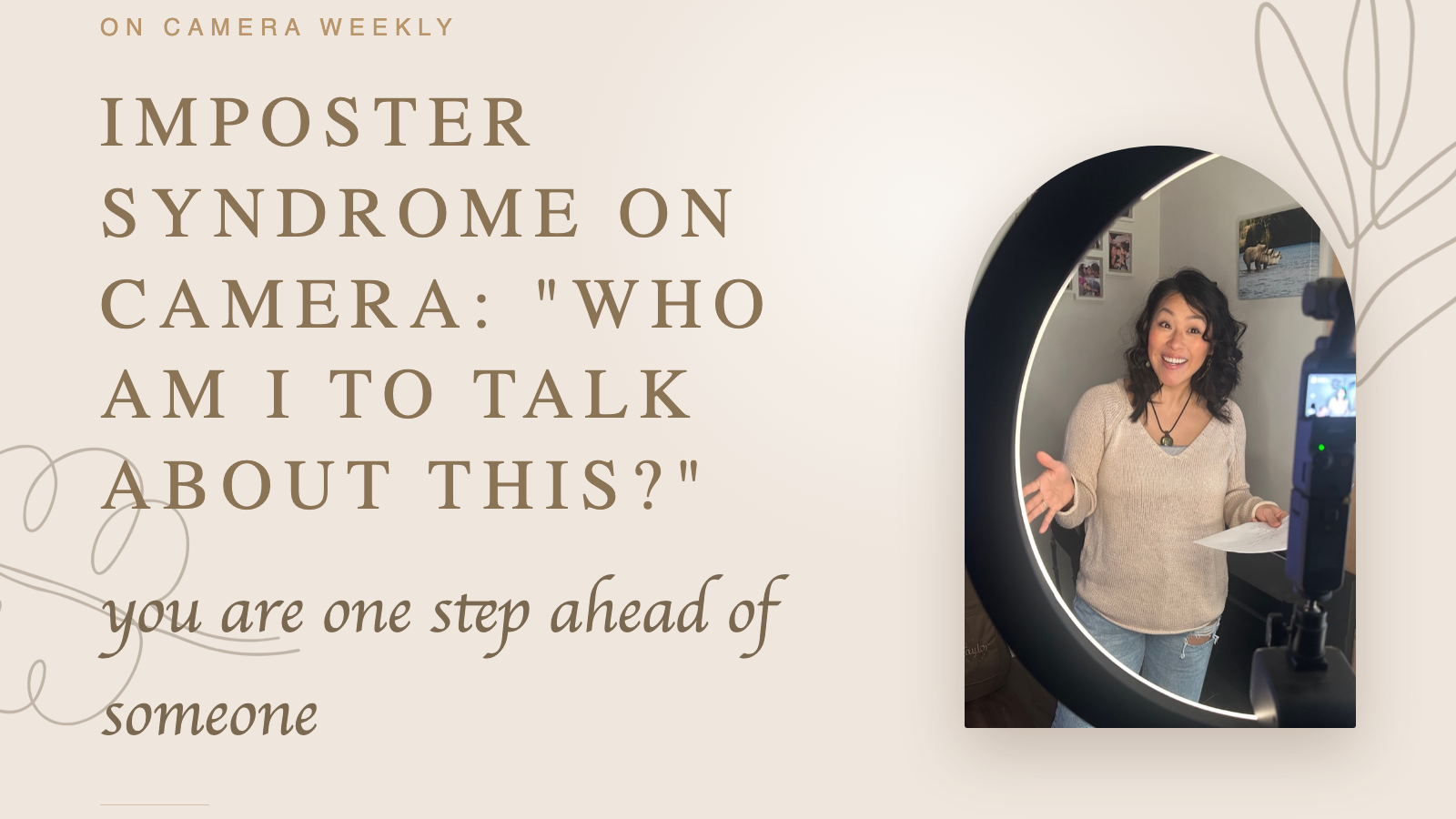
The video is recorded. Your thumb is over the post button. And the voice arrives, right on schedule: who am I to talk about this?
You know the voice. It waited until you'd done the hard part — you picked the topic, you pressed record, you got through the take. And now, at the exact moment of showing it to anyone, it clears its throat.
Someone more qualified already covered this. With better lighting. And a bigger audience. And actual credentials. Who do you think you are?
So the video sits in your drafts. Next to the other ones.
That voice has a name — imposter syndrome — but I find the name almost too tidy for how it actually feels on camera. Because on camera it's not a vague self-doubt. It's specific, it's personal, and it shows up at the worst possible second. So that's what this post is about: what the on-camera version of it actually sounds like, why it gets louder right when you're about to grow, and the reframes that genuinely quiet it. Not by making you feel more qualified. By changing the question entirely.
Not sure where you’re starting from? Find your Camera Confidence Zone — it takes two minutes.
What imposter syndrome sounds like on camera
Off camera, the feeling is fuzzy — a general sense of not-quite-enough. Point a lens at yourself and it sharpens into very particular sentences:
- "Someone smarter has already said this, better."
- "The moment I post this, a real expert will see it and know I'm faking."
- "I've only been doing this a few years. Who am I to teach anyone?"
- "People who actually know me will laugh — since when is she an authority?"
Notice what all of those sentences have in common: they assume you're applying for a job you never actually applied for. The job of World's Leading Expert. The voice holds you to the standard of the most credentialed person alive on your topic, notices you fall short of it — everyone does — and rules you unfit to speak at all.
But you were never applying for that job. And the person you're actually here to help isn't looking for that person anyway. Hold that thought — we're coming back to it, because it's the whole key.
Why it spikes right before you grow
Here's the pattern almost nobody tells you about: this feeling isn't constant. It spikes. And it spikes at very predictable moments — your first video, your first live, the first post where you actually said what you think, the moment your face goes where strangers can see it.
In other words: it spikes exactly when you're about to become more visible than you've ever been.
That's not a coincidence. Visibility is exposure, and exposure is exactly what your protection system watches for. When you stay small and quiet, there's nothing to protect you from — so the voice stays quiet too. The moment you reach for something bigger, the alarm fires, and it fires in the most effective language it knows: not "danger!" but "who do you think you are?" Because that question, unlike a fire alarm, actually stops you.
Which means the feeling you've been reading as evidence — see, even my own gut knows I'm not ready — is actually a signpost. It marks the edge of your current comfort zone. It shows up at the border, every time, for everyone who crosses it. Growth and this feeling arrive together. They always have.
The reframes that actually work
You don't quiet this voice by collecting more credentials — it doesn't care about credentials, it will move the bar every time. You quiet it by changing what you believe your job is. Three reframes do most of the work.
1. You're one step ahead, not on top of the mountain
You are not claiming to be the world's expert. You're one step ahead of the person you're helping — and one step ahead is exactly the right distance to teach from.
Think about who actually helped you learn anything hard. Was it the world's foremost authority? Or was it someone slightly ahead of you, who still remembered what it was like to be confused — where the path was slippery, which parts looked scarier than they were? The expert forgot the beginning years ago. You're still close enough to see it. That's not your weakness as a guide. It's your qualification.
2. Your story is the one credential nobody else has
Yes — someone more polished has probably covered your topic. Here's what they haven't covered: how you got through it. Your dead ends, your slow mornings, the thing that finally worked for you. There are a thousand videos about your topic and exactly zero about your road through it, and the person who needs your particular road — the one whose life rhymes with yours — will scroll past every expert to find you. Nobody can out-credential you on your own story. It's the one thing that can't be copied, and it's the thing people actually connect to.
3. Document, don't perform
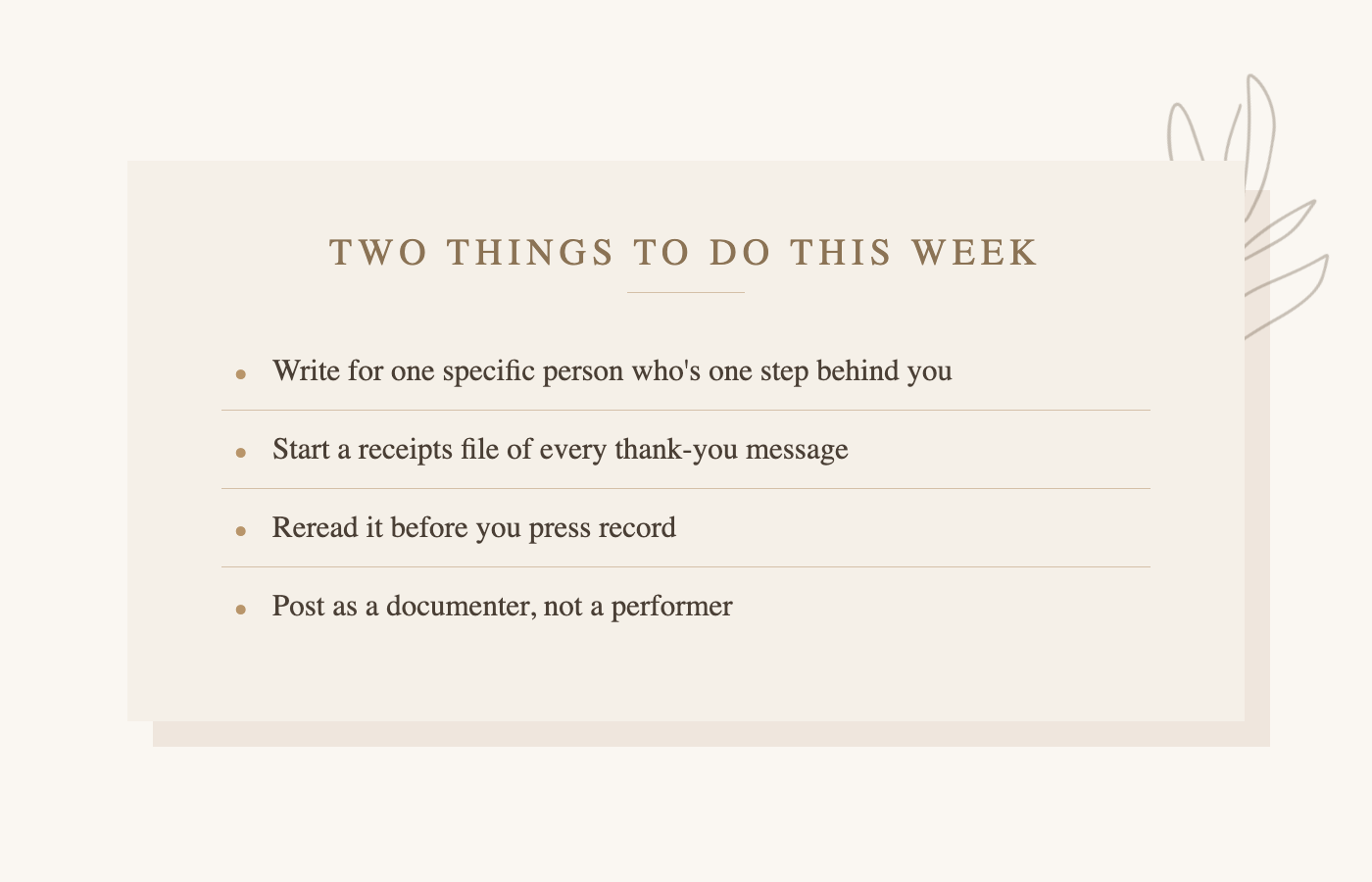
The imposter feeling gets its power from a performance frame: you, on stage, claiming authority, waiting to be found out. So drop the stage. You're not announcing "I am the expert" — you're saying "here's what I'm learning, here's what worked for me, come along." A documenter can't be exposed as a fraud, because a documenter never claimed to be anything other than someone honestly sharing the road. It's also, not by accident, the version of you people most want to watch — I wrote about why in how to be yourself on camera.
Two practical anchors
The "one person, one step behind you" exercise. Before your next video, picture one real person who is exactly where you were a year ago — a specific face, someone you've actually met or spoken to. Now ask: would this video help them? Not the experts. Not the comment section you're imagining. Them. If the answer is yes, the video has earned its place, and the question "who am I to talk about this?" has an answer: the person who can help them. Make the whole video for that one face.
Keep a receipts file. Every thank-you message, every "this helped me," every comment that says "I needed this today" — screenshot it and put it in one folder. All of it. The voice in your head deals in feelings; the folder deals in evidence. On the days the voice is loud, you don't argue with it. You open the folder and read what the people you've actually helped had to say. Feelings lie about your usefulness. Receipts don't.
I still felt it — twenty years in
I want to be honest with you about something, because I think you need to hear it from someone on the other side.
I've spent more than twenty years in the entertainment industry — on sets like The Good Doctor and Skyscraper, surrounded by cameras, being directed, being watched. And when it came time to turn a camera on myself, as myself — no character, no script, just me and my own message — the voice showed up for me too. I know what it's like to feel blocked by perfectionism, self-doubt, and the fear of being seen. That used to be me — until I learned to stop performing and start connecting. The credentials never silenced the voice. Twenty years of sets didn't. Changing the job description did: I stopped auditioning for "expert" and started showing up as a person with something honest to share.
And the doubt underneath this is rarely really about qualifications. It runs deeper — into worth, into old barriers. A member put it this way:
"Elfina's gentle and powerful ability to help me uncover and address the root causes of my struggles was a truly healing experience — making it possible for me to release long-held emotional barriers. The session left me feeling lighter and more aligned with myself. I highly recommend working with Elfina to anyone who feels held back or stuck."
— Ben B.
"Long-held emotional barriers." That's what "who am I to talk about this?" usually is, underneath. Not a fact about your résumé. An old barrier, still doing its old job.
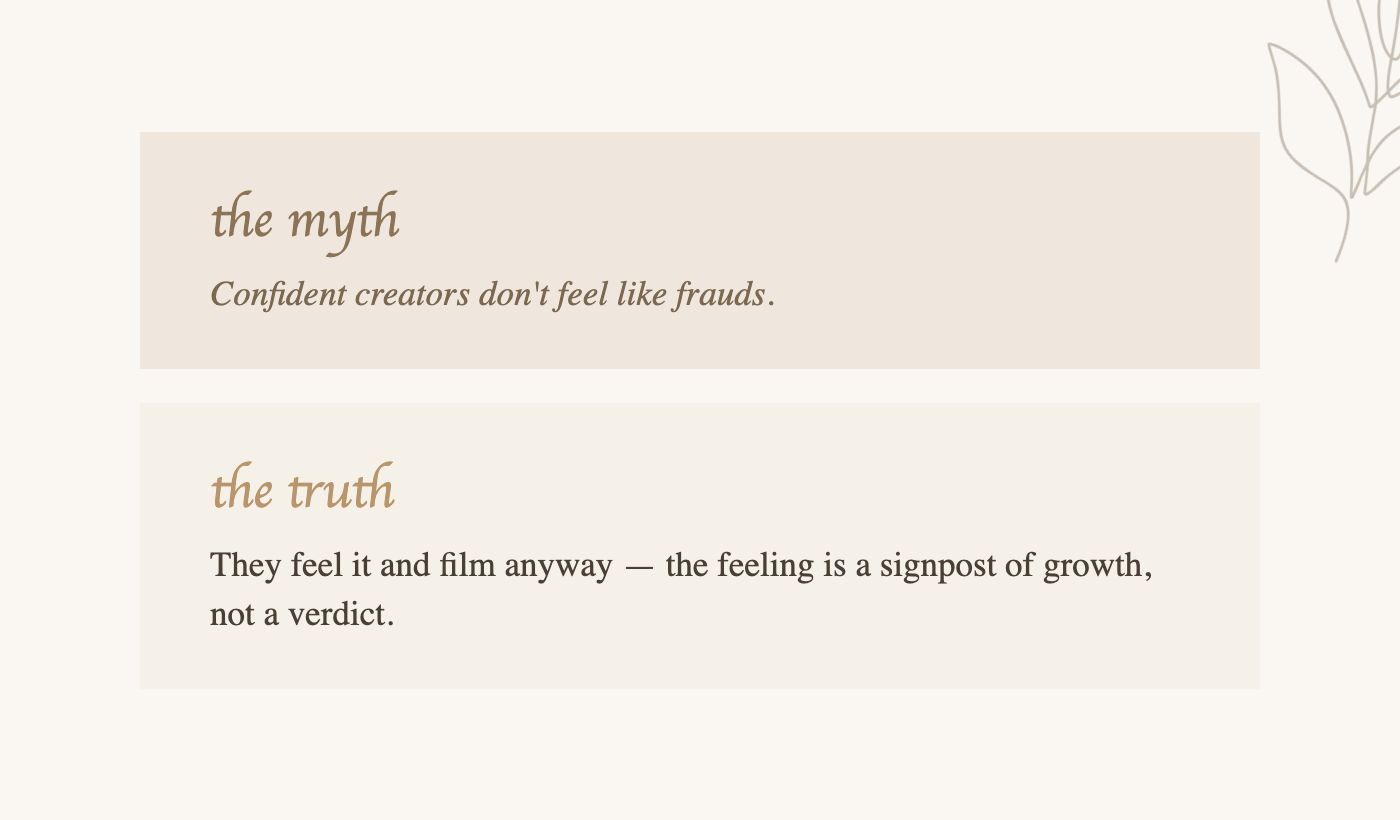
The myth: "confident creators don't feel like frauds"
From the outside, the people showing up on camera every week look like they've never once wondered if they're qualified. So you wait to feel like they look before you start.
Here's the truth from someone who's spent two decades around professional performers: they feel it too. The feeling doesn't get voted off the island by success — if anything, every new level wakes it up again, because every new level is new exposure. The difference between them and the person with forty drafts isn't the absence of the feeling. It's what they've decided it means. They've stopped reading it as a verdict — you're not ready — and started reading it as a signpost: you're at the edge of something new. Keep going.
So the goal was never to feel qualified first and post second. It's to post with the feeling riding along in the passenger seat, getting quieter with every video it fails to stop.
If you're wondering where you actually are on this road — what's holding you back and what to work on first — the Camera Confidence Zone quiz takes two minutes and will meet you exactly where you're standing.
Someone one step behind you is looking for exactly what you know, told exactly the way you'd tell it. That's who you are to talk about this.
Be seen. Be heard. Be authentically you.
Two minutes, a handful of honest questions, and you'll know exactly which zone you're in — and what to work on next.
Take the QuizThat question quiets down with evidence, and evidence is just videos you've made. Compass keeps the next one in front of you so the pile grows.
See How It Works