
You have the idea. You've had it for weeks. The phone is sitting right there — and you still haven't pressed record.
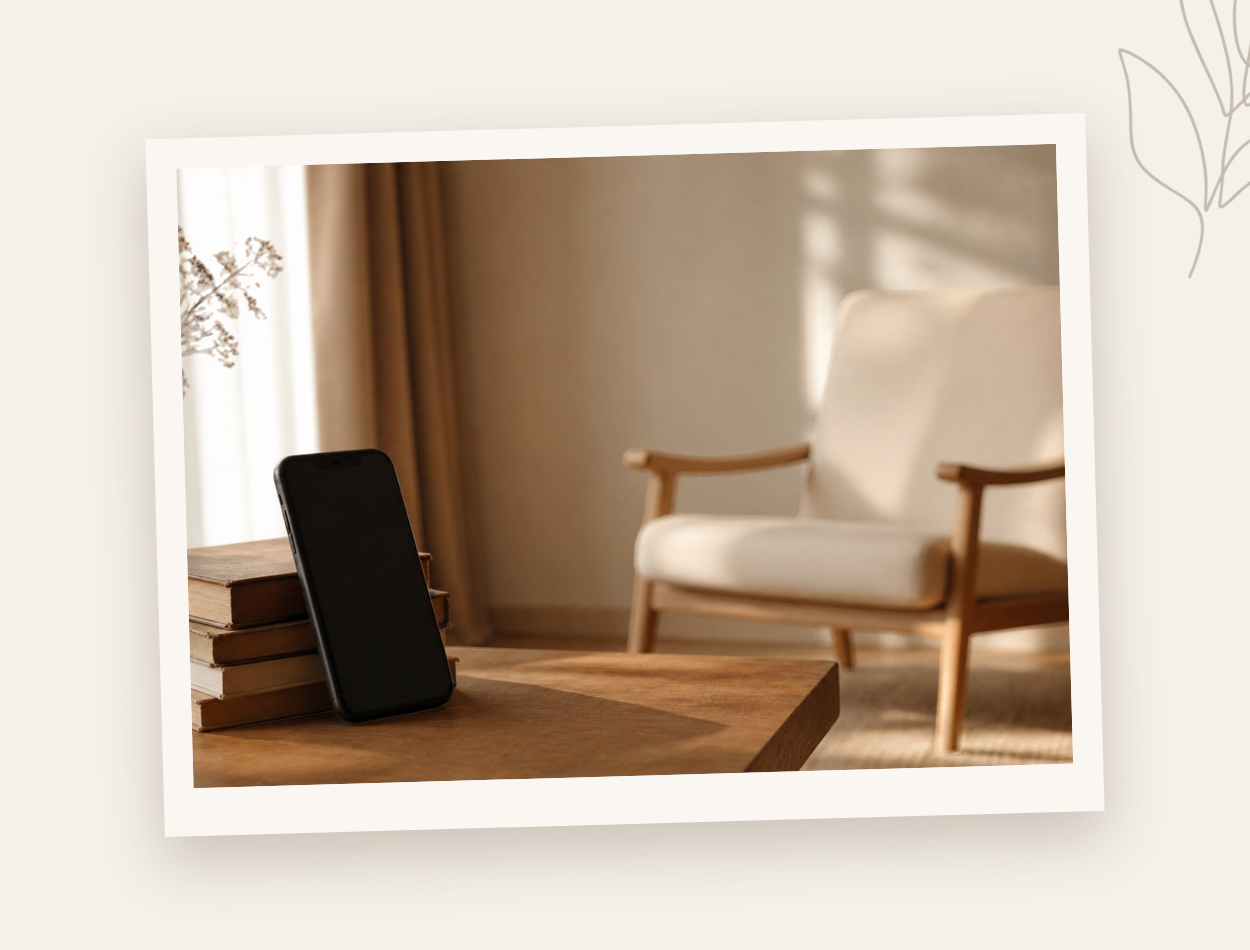
I know this moment. You prop the phone against a stack of books. You open the camera app. You look at yourself on the screen for four or five seconds. And then you find a reason to do it later. The kitchen needs cleaning. The light isn't right. You'll film it tomorrow, when you feel more ready.
Tomorrow has been coming for a while now, hasn't it?
I've been on film sets for more than twenty years. And the first time I turned a camera on myself — no director, no crew, just me talking to a lens in my living room — I felt sick. All that experience, and my hands were still unsteady. So when I share first YouTube video tips with the people I coach, it's not theory from someone who found it easy. It's the ladder I used myself, one rung at a time.
And the first rung is a reframe.
Your first video's job is to exist
Not to perform. Not to rank. Not to launch a channel with a bang. To exist.
Nobody's first video is good. Not mine, not yours, not the creators you admire. Actually — go check. Pick your favourite YouTuber, sort their videos by oldest, and watch the very first one. The awkward framing. The stiff delivery. The audio that sounds like it was recorded inside a cupboard. It's all still up there, publicly, because they understood something the rest of us take years to learn: that video was never the product.
It was the door.
Your first video is a door. It only has to open. Everything you're worried about — polish, presence, personality — lives on the other side of it, and there is no way through except through.
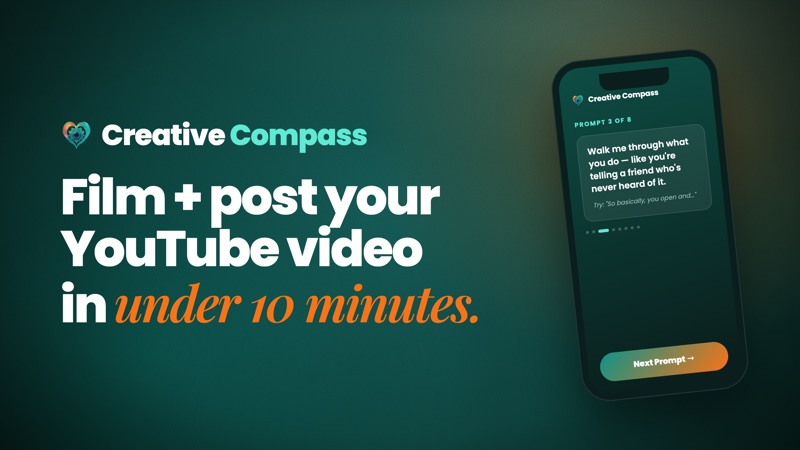
Not sure what to film next? Creative Compass builds the plan with you.
First YouTube video tips for when you're nervous
Most advice for beginners is really advice for people who aren't scared. Buy this microphone, study this hook formula, design this thumbnail. None of it touches the actual problem, which is that your chest goes tight when the red dot appears.
So this plan is built nerves-first. Every step exists to lower the temperature, not raise the stakes.
Pick a topic you could talk about at dinner
Not your smartest topic. Not the one that positions you as an expert. The one you could talk about at a dinner table, tonight, with zero notes — because a friend asked and you lit up.
If you'd need to research it first, it's not your first video. If you've explained it out loud to a real human in the last month, it probably is. Familiarity is the closest thing to confidence you can borrow, and for video number one, borrow everything you can.
Three bullets. That's the whole script.
Write down the three points you want to make. Short phrases, not sentences. Then put the pen down.
I know a full script feels safer. It isn't. A script turns you into a reader, and readers sound flat — I wrote a whole post on why you sound rehearsed on camera if you want the deeper why. Three bullets keep you honest. You'll wobble, you'll circle back, you'll say "um." Good. That's what a person sounds like.
Your phone and a window are plenty
The camera in your pocket is better than the ones entire TV shows were shot on not long ago. Set it at eye level, face a window, and you're done. If you want the two-minute version of looking your best with what you own, it's here: how to look good on camera. Read it after you film, not before. Gear research is the most respectable form of hiding I know.
Film the whole thing badly once, on purpose
This is the step people skip, and it's the one that works.
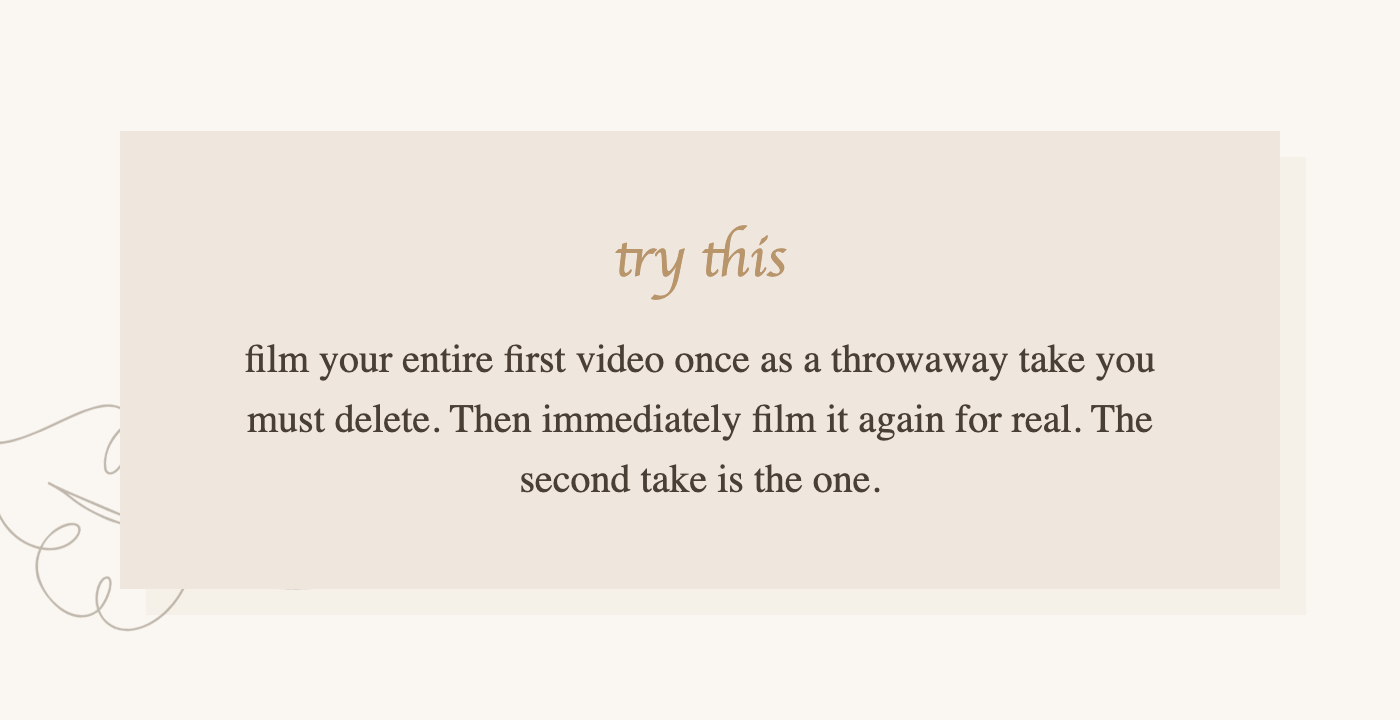
Before your real take, film a throwaway take. The entire video, start to finish, with full permission to be terrible. You are not allowed to keep it. Delete it the moment you're done — that's the rule, and the rule is what makes it safe.
Here's why it works. The worst part of recording isn't the talking. It's the adrenaline spike when you press the button — the flooded, floaty, out-of-body feeling that makes your voice go strange. That spike burns off. It just needs one full pass to do it. Actors know this; the first take of the day is rarely the one you see on screen. It exists so the second one can.
By take two, something in your body has quietly concluded: oh. We survived that. And you sound like yourself.
Keep it short — length is where first videos die
Two to four minutes. That's the whole assignment.
I've watched so many first videos die at the ten-minute mark — not because the person ran out of things to say, but because a long video multiplies everything. More takes to fumble. More footage to cringe through. More editing to drown in. The project swells until it quietly becomes a thing you're "still working on," which is a gentle way of saying a thing you'll never post.
A three-minute video can be filmed, trimmed, and uploaded in an afternoon. Momentum loves small. Give it small.
The upload threshold
You filmed it. It exists. Now comes the moment that stops more first-time creators than the camera ever does: making it public.
If public feels too big, don't make it public. Upload it as unlisted — it's live on YouTube, but only people with the link can see it. Then send that link to one person. One kind, safe person. Let it be seen by an audience of exactly one.
Something shifts when another human has watched it and the world didn't end. Usually within a day or two, flipping it to public stops feeling like a cliff and starts feeling like a checkbox. That's the threshold crossed — not in one leap, but in two small steps. There's no rule that says courage has to happen all at once.
What matters for video #1 — and what doesn't yet
Almost everything the internet tells beginners to worry about is a chapter-three problem. You are on page one. Here's the honest split.
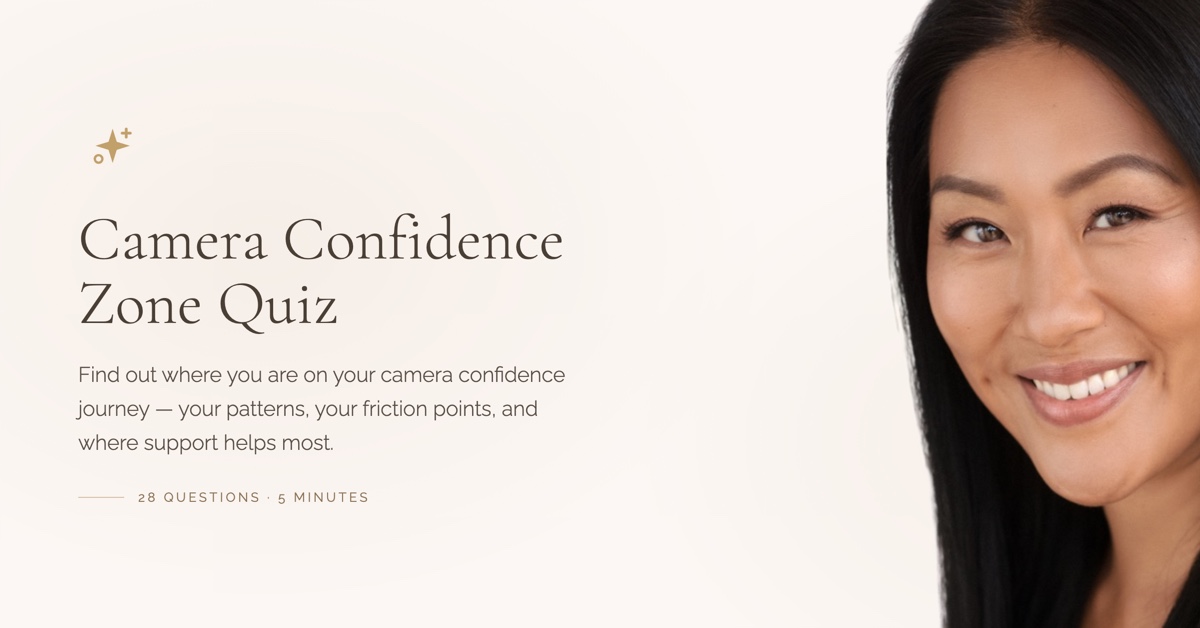
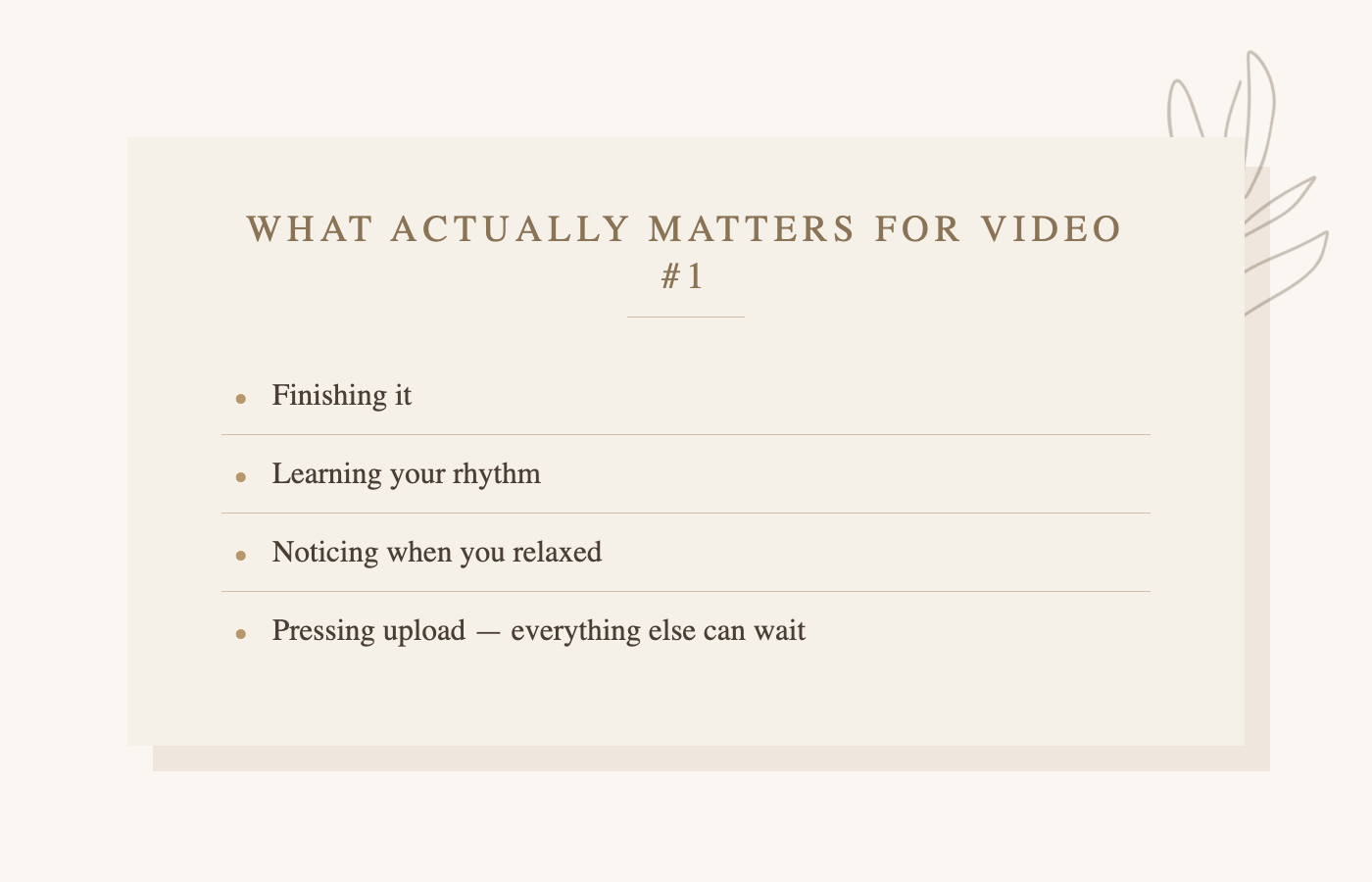
What matters right now: finishing, and noticing. Finishing, because a completed bad video teaches you more than fifty perfect videos you never made. And noticing — where did you relax? Which take felt most like you? When did you stop performing and start talking? That's you learning your rhythm, and it's the only curriculum that counts this early. (If you want a clearer read on where you're starting from, the Camera Confidence Zone quiz takes about three minutes and tells you exactly that.)
What doesn't matter yet: thumbnails, SEO, upload schedules, subscriber counts, and every piece of gear you don't already own. All real topics. All completely irrelevant to a channel with zero videos on it. They'll be waiting for you at video ten, I promise.
A member put it this way after her first sessions:
"I came to her because I want to create content, but noticed something blocking me from being authentic in front of the camera. In only the first session, she helped me uncover so much — guiding me through my thoughts, the source of the trigger. It was super valuable. I think everybody should do sessions with her."
— Mira N.
The block is almost never about skill. It's about the fear of being seen before you feel ready. And the only cure I've ever found for that one is being seen — gently, on your own terms, starting small.
The myth: "my first video needs to be good to start a channel"
Here's what actually happens when someone discovers a creator they love. They find video forty. Or video two hundred. The algorithm serves up the recent, polished stuff — the videos made by a person with years of reps behind them. Almost nobody meets a channel through its first video.
Which means your first video isn't your first impression. It's your private training ground with a publish button. Its audience is mostly you, six months from now, looking back and smiling at how far you've come.
Your twentieth video is the one people will find. But there is no twentieth video without a first one. That's the whole job of video number one: not to be good — to unlock the next nineteen.
So this week, not someday: dinner-table topic, three bullets, phone against a window. One throwaway take, one real one, under four minutes. Unlisted, sent to one person, then live.
You don't have to feel ready. You just have to press the button. And you don't have to do it alone, either — some of the warmest people I know are on the other side of that first upload, cheering for yours.
Be seen. Be heard. Be authentically you.